
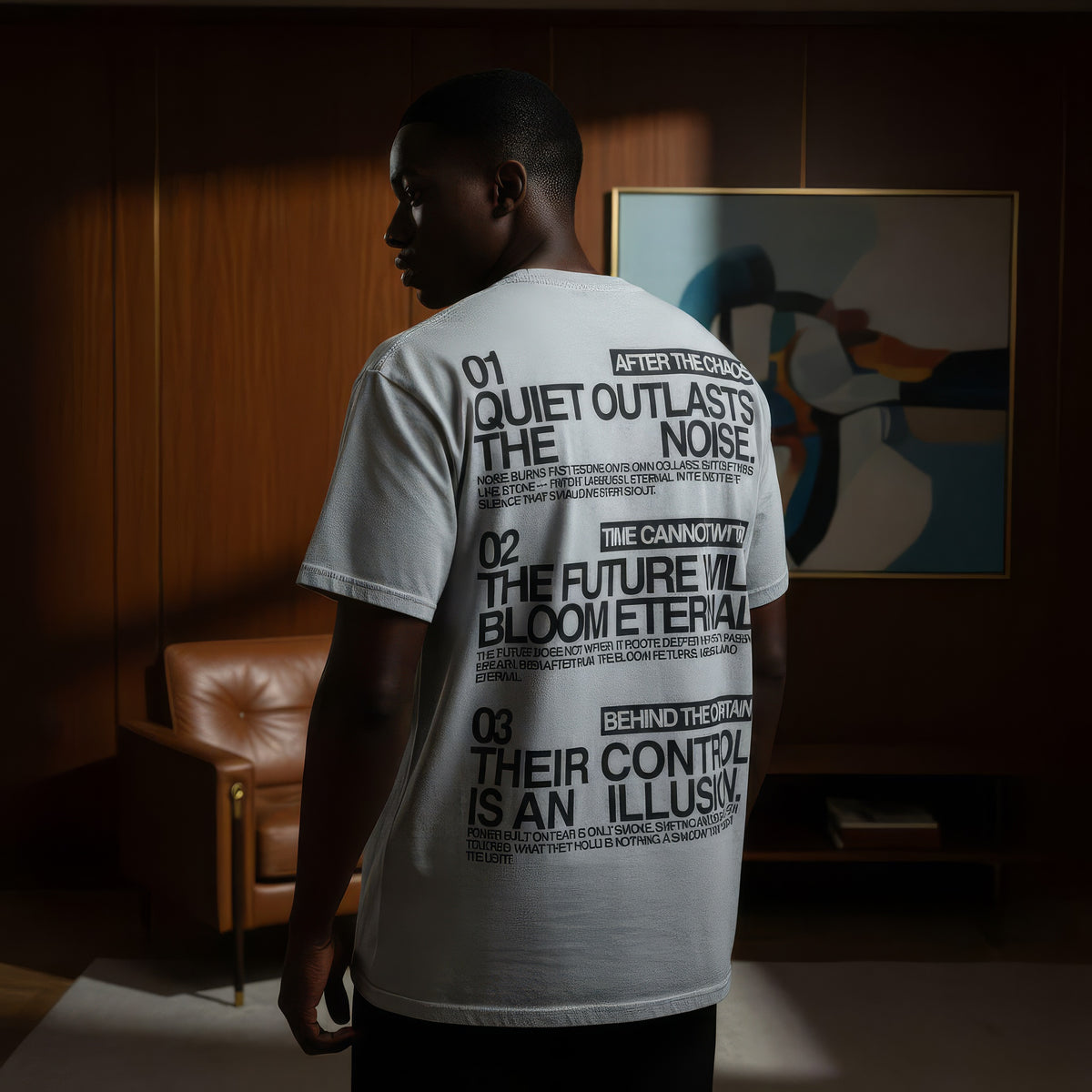
No opening credits.
No exposition.
Just the low hum of the city outside. A streetlight cutting across the wall. Someone moving through the frame with a reason they refuse to explain.
That is MERLE.LTD.
Not loud. Not passive.
A quiet thriller.
The kind of story that leaves evidence in the details : a washed-black tee, a distorted line, a familiar route taken one more time after midnight. The kind of film where the clothes tell you who someone is before they say a word.
MERLE begins with that tension.
Clothing as documentation. Clothing as atmosphere. Clothing as a signal sent into the dark.
The Scene Opens in Chicago
Every quiet thriller needs a setting.
For MERLE, it is Chicago.
Concrete. Transit lines. Apartment windows glowing after midnight. The scrape of skate decks. The hiss of spray cans. Music leaking through a wall while someone works on a verse, a painting, a beat, a plan.
The city does not perform for the camera.
It simply exists.
That matters. MERLE’s perspective comes from observing the overlooked details that shape everyday experience. Transit systems. Industrial textures. Archived media. Underground music. Familiar streets carrying unfamiliar moods.
The brand’s story of streetwear is not about chasing a trend cycle. It is about staying close to the source : the places where clothing becomes part of the environment and identity forms without permission.
The result is streetwear with a film-like quality.
Not costume.
Character.
The city is never just the setting. It is part of the plot.
The Protagonist Does Not Need an Introduction
In most films, the protagonist enters with a visual language already in place.
You notice the jacket. The posture. The way they move through a room. You understand the character before the dialogue catches up.
That is what good clothing does.
It creates presence without demanding attention.
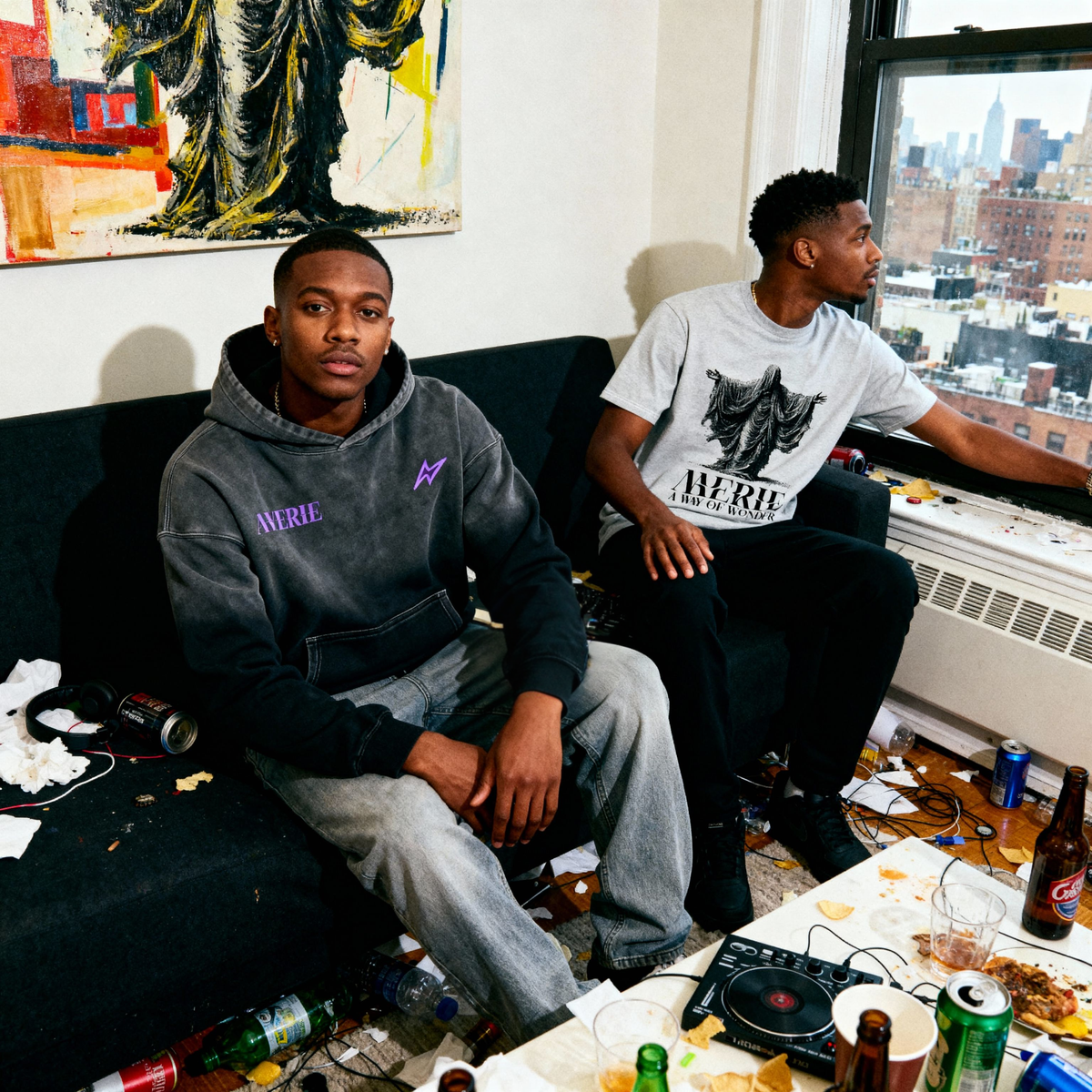
MERLE builds for people who understand that distinction. Independent artists. Musicians. Designers. Collectors. The ones who spend more time making than explaining. The ones who can sit quietly in a room and still change its temperature.
The garments carry intention, but they do not overstate it.
A graphic sits where it needs to sit. A silhouette holds its shape. A distressed finish feels lived in instead of manufactured into rebellion. The message is there for anyone paying attention.
This is organized rebellion.
A disciplined refusal to become background noise.
Fashion has always understood the power of the screen. Film gives clothing context. It gives a jacket a memory. A tee becomes associated with a specific street, a specific character, a specific moment when everything changes.
Research on the relationship between film fashion and streetwear often points to the same truth: the pieces that endure are not always the loudest. They are the ones that communicate character, mood, and movement. Read more about that screen-to-street relationship.
MERLE works in that space.
The space between what is seen and what is understood.
The Camera Stays Close to Texture
A quiet thriller does not need explosions every five minutes.
It uses texture.
The grain of a frame. The flicker of a television. The shine of rain on concrete. The rough edge of a photograph pulled from an old drawer.
MERLE’s clothing carries the same visual tension.
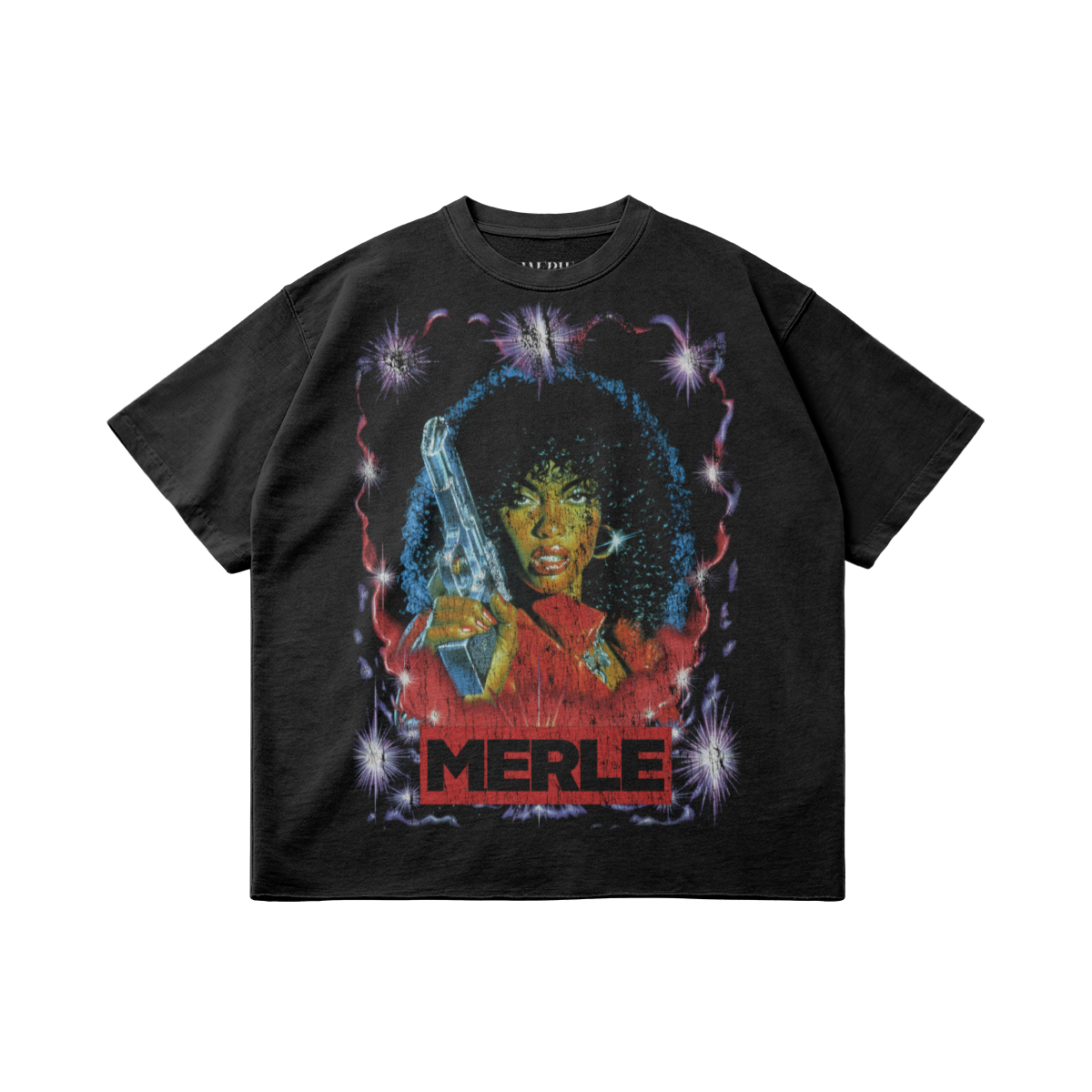
The Getaway T-Shirt arrives in faded black with a raw-edge hem, drop shoulders, and an oversized fit. It is made from 260g/m² combed cotton and treated to feel like evidence from somewhere between memory, fiction, and late-night television.
The garment does not explain the moment.
It preserves it.
That is the difference between decoration and atmosphere.
A perfect black tee can be clean. A washed black tee can carry history. A distressed edge can suggest movement : the garment has been somewhere. It has passed through rooms, trains, kitchens, studios, and streets. It has absorbed the night.
The Plot Is Built from Signals
The best thrillers leave clues everywhere.
A number on a file. A message left unread. A shape in the distance. Something that looks ordinary until the second viewing.
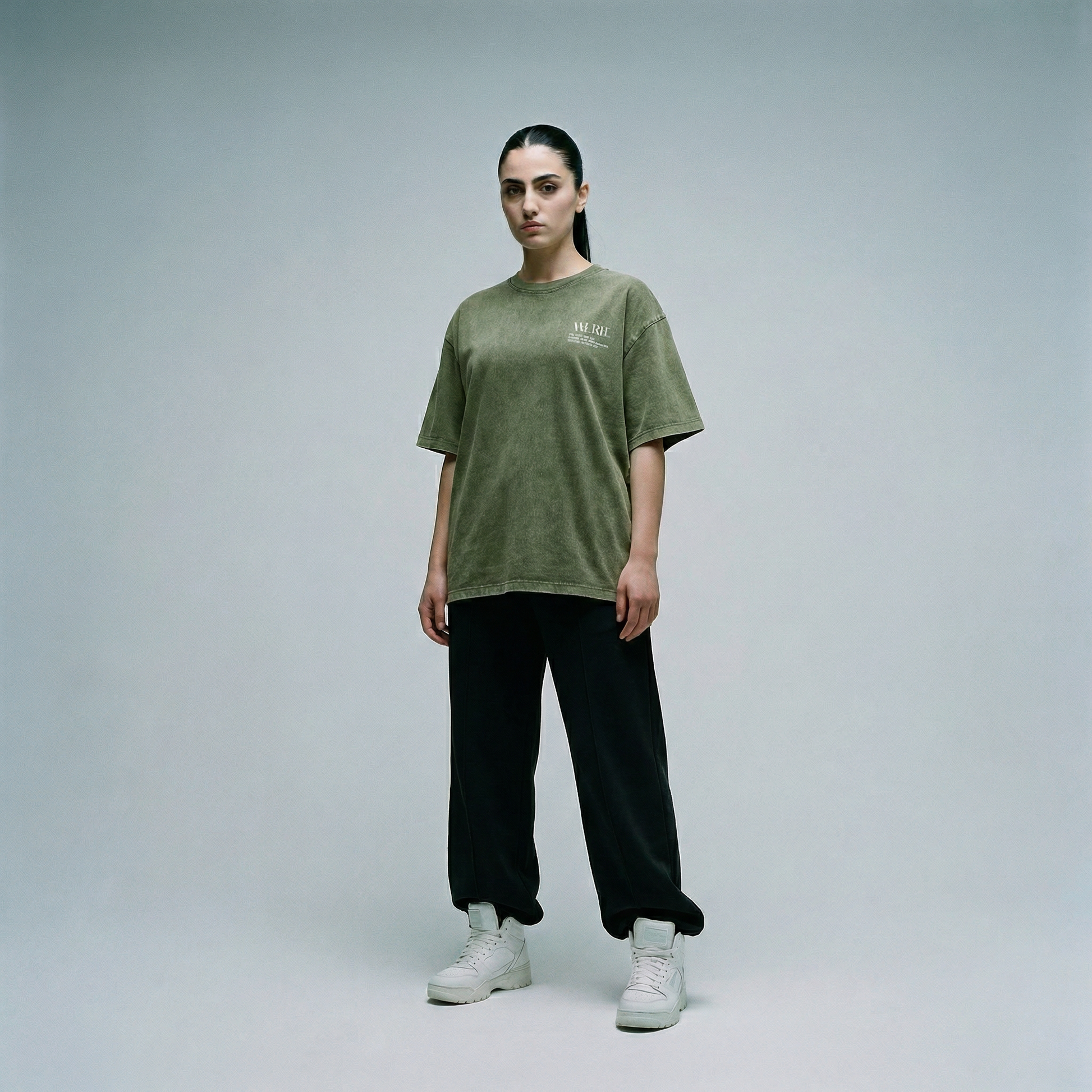
MERLE’s Frequency Log T-Shirt works the same way.
Washed olive. Heavyweight cotton. Analog static distortion. Classified metadata fields. An archive ID stamped across the back.
It feels recovered rather than released.
Like a cultural artifact pulled from a damaged transmission.
The design speaks to the people moving through the night with intention. People who understand signal loss. Repetition. Static. The strange clarity that arrives when the city quiets down and your own thoughts become impossible to avoid.
The tee does not give you a slogan and ask you to repeat it.
It gives you a frequency.
You decide what comes through.
Every garment is a message. The interesting part is what survives the interference.
Order Breaks Just Enough
A quiet thriller is rarely calm.
It is controlled.
The tension is always present. Just under the surface. The room is orderly, but one object is out of place. The conversation is polite, but someone knows more than they are saying.
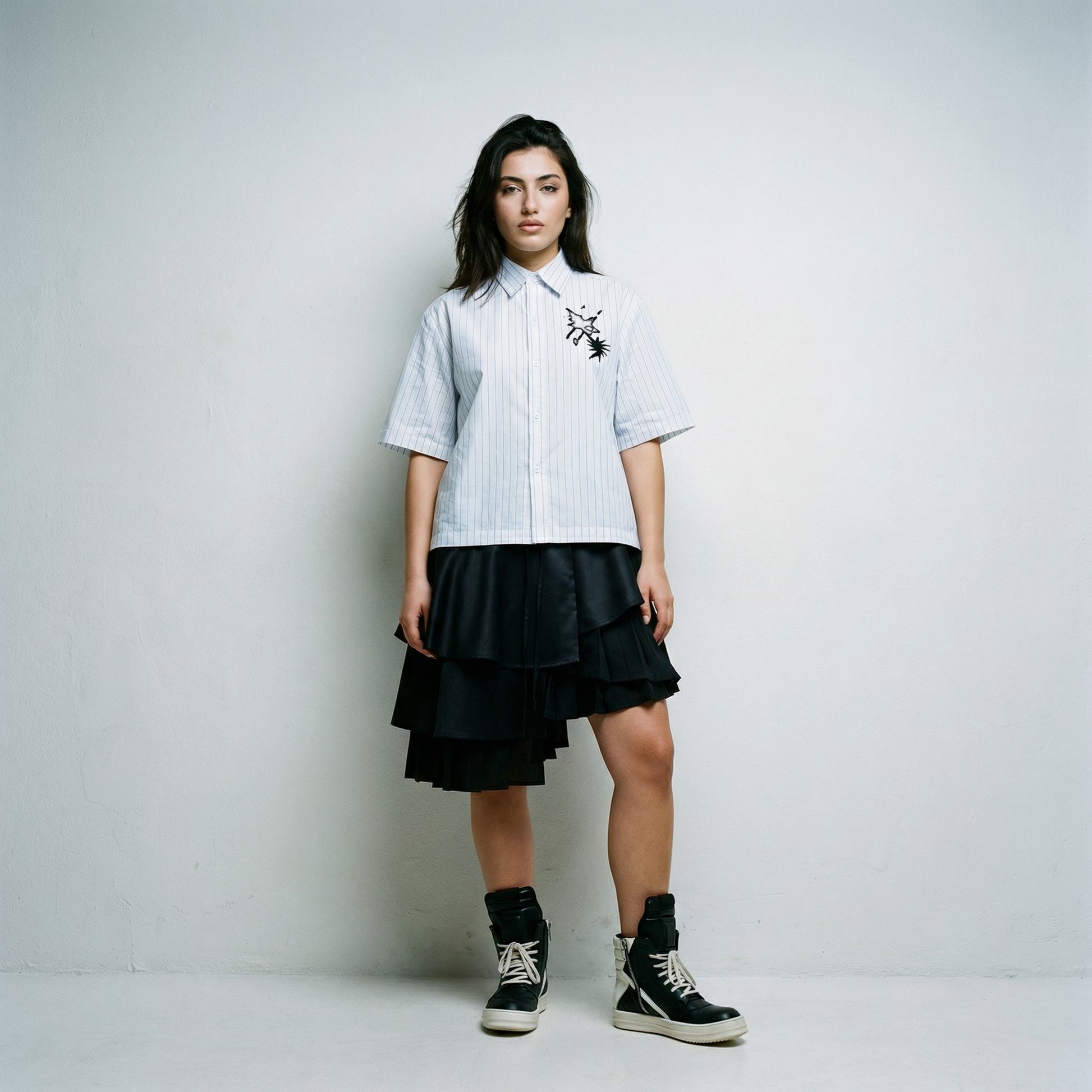
That is the energy behind the Distortion Striped Button-Up Shirt.
A familiar form. A deliberate interruption.
The relaxed white striped silhouette carries a mark of disruption across the clean structure. The piece balances precision and unpredictability : a classic shirt turned slightly off-center.
Not chaos.
Pressure.
The distinction matters. MERLE does not treat rebellion as random noise. The clothing is built around friction: polished against worn, minimal against expressive, quiet against impossible to ignore.
That friction creates identity.
A button-up can look formal. It can also look like a disguise. Worn loose over a graphic tee, it becomes a layer between the public version of you and the version that appears after dark.
The Wardrobe Moves Through Scenes
A protagonist does not wear one outfit forever.
They move.
From the studio to the train. From the late shift to the after-hours diner. From the gallery opening to the apartment where the real conversation begins.
Clothing has to move with them.
MERLE’s design language is built around that motion. Oversized fits. Drop shoulders. Layerable pieces. Washed finishes. Familiar forms carried with new weight.
The garments are not designed for one perfect photograph.
They are designed to pass through scenes.
The Standard Issue collection carries that idea clearly. It is a working wardrobe for people who do not separate their creative life from their everyday life. The outfit is part of the process. The walk to the studio counts. The bus ride counts. The empty street counts.
No performance.
No signal boosting.
Just movement with intent.
A good uniform does not limit the character. It gives them somewhere to begin.
Why MERLE Feels Like a Quiet Thriller
Because the brand trusts the viewer.
It does not reveal everything in the first frame.
It lets the image breathe. It allows a graphic to feel like a found object. It uses restraint as tension. It understands that a limited drop can feel less like a product launch and more like a scene appearing briefly before disappearing again.
That is the exclusive inclusion at the center of MERLE.
The pieces are made for a specific kind of person, but the door is open. You do not need to prove your credentials. You do not need to perform underground culture for an audience.
You only need to recognize the feeling.
The hum of fluorescent lighting.
The scrape of fabric against a chair.
A hard drive spinning in a quiet room.
The city still awake when everyone else is supposed to be sleeping.
MERLE exists there.
Between documentation and design. Between film and music. Between the clothes you wear and the person you are becoming.
Explore the brand’s mission and origin story, then look again at what you already wear. Ask what it records. Ask what it communicates when you are not speaking.
Because the most powerful wardrobe is not a costume.
It is proof of life.
And if MERLE.LTD were a film, the final scene would not close the story.
The camera would follow you out into the street.
Still moving.
Still watching.
Still difficult to categorize.