
You know the feeling.
A room lit by one tired lamp.
A fluorescent hallway humming after midnight.
A face half-hidden in shadow.
A jacket that looks better because it has already lived a life.
Nothing screams for attention.
Everything holds it.
That is the A24 effect.
It is not one color palette. Not one camera. Not one approved uniform. It is a shared instinct : natural light, emotional distance, imperfect texture, quiet tension, and characters who look like they got dressed without asking the world for permission.
Film creates the atmosphere.
Fashion steals the atmosphere and makes it portable.
The look is not polished. It is present.
Since its launch as an independent distributor in 2012, A24 builds a visual identity across wildly different films. Moonlight. Hereditary. Midsommar. Uncut Gems. The Witch. Past Lives.
They do not all look the same.
That is the point.
What connects them is not a formula. It is a refusal to flatten emotion into spectacle. As StudioBinder’s breakdown of A24 cinematography explains, many of these films rely on practical lighting, intimate framing, restrained grading, and camera movement shaped by character psychology.
The image feels lived in.
The room stays imperfect.
The shadows stay uneven.
The camera breathes with the person inside the frame.
Fashion catches that energy because polished culture is exhausting. Every campaign is brighter. Every logo is louder. Every image is cleaned until there is nothing human left inside it.
The antidote is texture.
Washed cotton.
Loose denim.
A collar that bends.
A graphic that feels discovered instead of approved.
Imperfection becomes proof of life.
A24 turns taste into a uniform
A24 is more than a film company to its audience now. It becomes shorthand for a particular kind of cultural awareness.
You do not simply wear an A24 shirt.
You signal that you understand the reference.
That shift matters. Film merchandise stops functioning like ordinary promotional material. It becomes a membership card for people who live between categories : cinephiles, designers, musicians, writers, night-shift thinkers, and anyone who feels more at home in the margins than under a spotlight.
Vogue’s analysis of what fashion can learn from A24 points to the studio’s ability to build an entire cultural world around its films, merchandise, collaborations, and unusual objects. The logo matters because the culture comes first.
That is the difference between a symbol and a signal.
A logo slapped onto a garment says, “Look at me.”
A world built with intention says, “If you know, you know.”
Streetwear understands this language already. Limited drops. Strange references. Objects with lore. Pieces that become more valuable because they carry a story that cannot be separated from the people who found it first.
The product is only part of the experience.
The rest is atmosphere.
Why quiet cinema feels right in fashion
The current fashion landscape is loud.
Maximal graphics.
Extreme silhouettes.
Constant novelty.
A never-ending scroll of manufactured urgency.
Quiet, gritty film aesthetics push back without disappearing.
They make space for garments to work through suggestion instead of explanation. A faded black tee can hold more tension than a full-color billboard. A relaxed button-up can feel cinematic because of how it moves through a doorway, catches a streetlight, or folds across the shoulder.
This is where fashion becomes character design.
The best film wardrobes do not look like costumes. They look inevitable. They tell you who someone is before the character speaks.
A worn hoodie suggests repetition.
A boxy shirt suggests control.
Loose denim suggests motion.
A sharp graphic suggests a private belief finally made visible.
The clothing does not decorate the character.
It reveals the pressure underneath.
Grain makes clothing feel remembered
Digital images are precise. They show everything.
Film grain does something else. It softens the edges. It adds distance. It makes a present moment feel like memory before the moment is even over.
That quality transfers directly into fashion imagery.
A grainy lookbook can make a new garment feel collected. A distressed finish can make a fresh tee feel like it already belongs to someone. Washed black, muted neutrals, and sun-faded graphics create the impression of history without pretending to be vintage.
The trick is restraint.
Too much distress becomes costume.
Too much grain becomes decoration.
Too much darkness becomes empty moodboarding.
The strongest work leaves room for the viewer.
That is why The Getaway T-Shirt feels at home in this conversation. Its faded black finish, raw-edge hem, oversized fit, and washed, distressed 260g/m² cotton give it physical evidence. The piece feels pulled from the space between memory, fiction, and late-night television : exactly the kind of object a character keeps wearing after the scene ends.
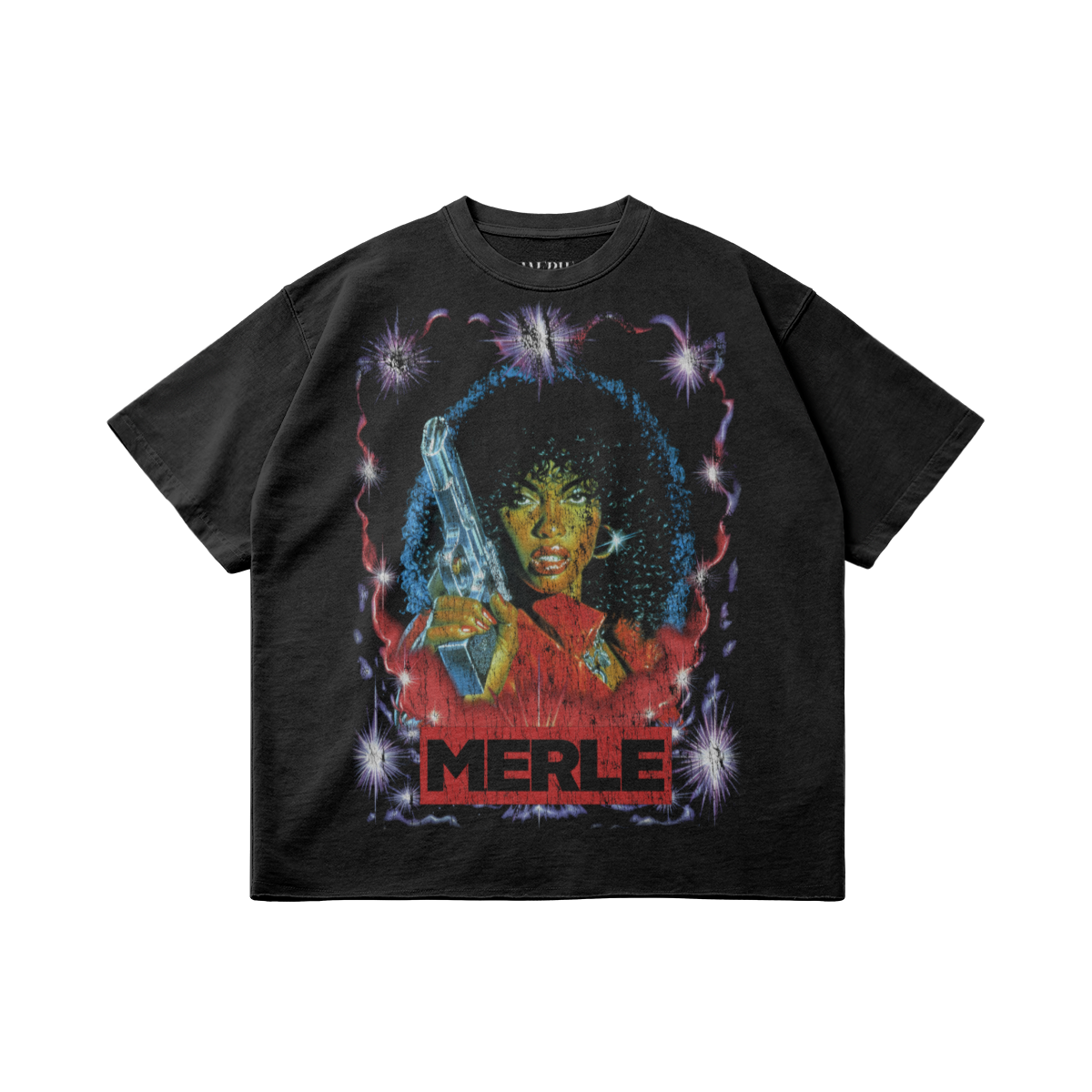
It is not trying to look new.
It is trying to look true.
Practical light. Real environments. No empty gloss.
The A24-coded image often starts with what is already there.
A lamp.
A window.
A parking lot.
A convenience store sign buzzing above wet pavement.
That approach creates intimacy because the light belongs to the environment. It does not feel imposed from outside the story.
Fashion can do the same.
Shoot the garment where it might actually exist. In a rehearsal space. Against a block wall. On a late train. Beside a record shelf. Under a kitchen light at 2:13 a.m.
Do not build a perfect world around the clothes.
Give the clothes a world to move through.
This is central to MERLE. Our pieces are designed for the after-hours : long walks through unfamiliar blocks, missed calls, fluorescent lighting, and the feeling that something is always slightly off.
The clothes do not chase the scene.
They move through it.
That distinction shapes the MERLE approach to film and music in streetwear. Film is not treated as a reference library. It becomes part of a larger cultural language : one built from sound, location, memory, and personal mythology.
Controlled disruption beats chaos
Quiet does not mean plain.
The best gritty aesthetics create tension through contrast. A clean silhouette interrupted by one strange mark. A pale shirt against a dark environment. A traditional garment carrying an unexpected graphic. Order, then friction.
That is organized rebellion.
The Distortion Striped Button-Up Shirt works from this exact premise. Its loose silhouette and clean striped structure meet a deliberate interruption : a mark of energy that breaks the pattern without destroying it.
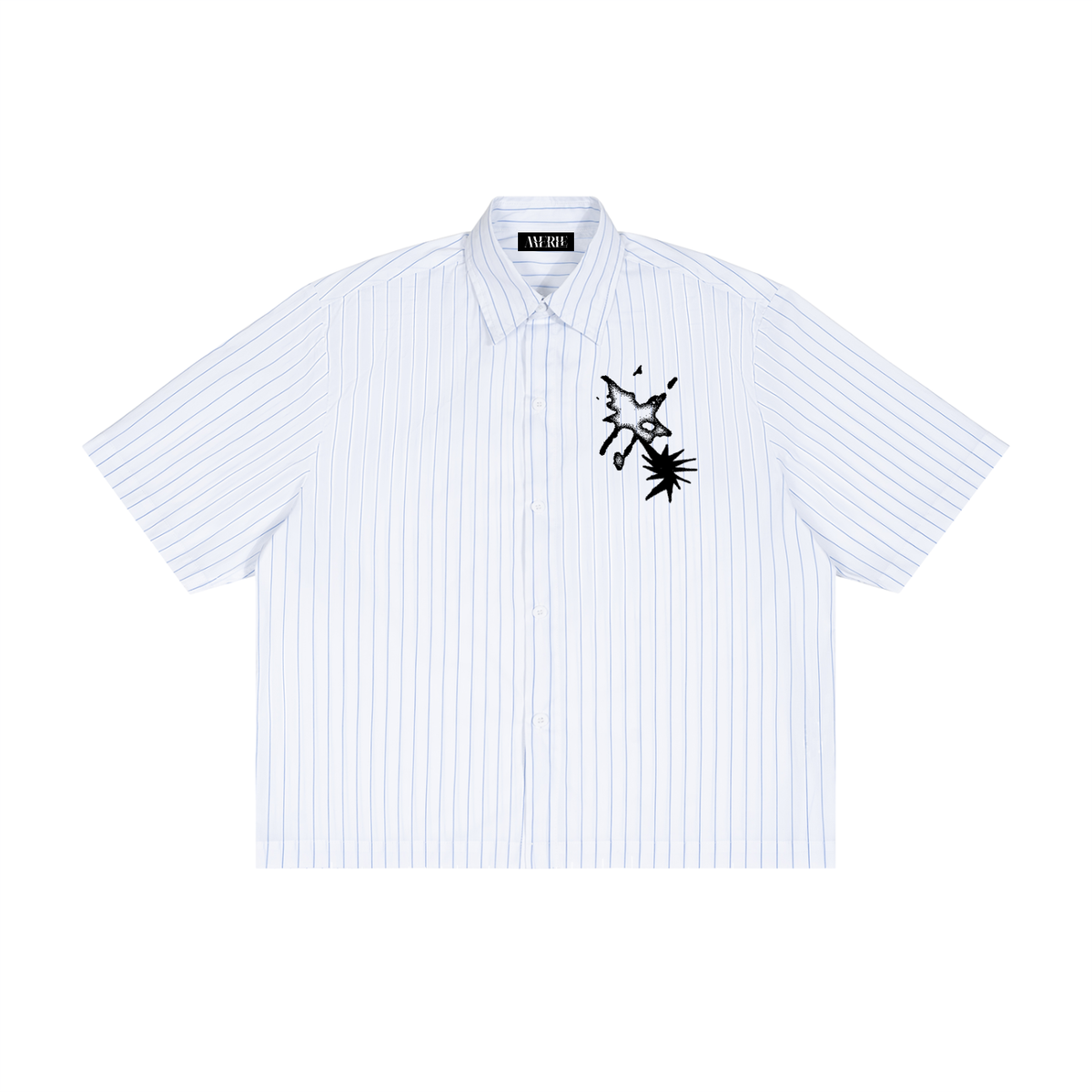
The shirt feels like a still frame where something has just happened.
Or is about to.
That uncertainty gives it power.
Fashion becomes cinematic when the outfit implies a story but refuses to explain the entire plot. You fill in the rest from the posture, the setting, the texture, and the silence.
The strongest statement leaves something unsaid.
The street is still the first screen
Long before fashion brands built cinematic campaigns, the street already understood framing.
A figure under a train bridge.
A silhouette crossing a parking lot.
A flash of color under a highway overpass.
A hand pulling a sleeve over the wrist.
Every block contains a scene.
Every outfit carries continuity.
MERLE grows from that same instinct. As we write in “The Streets Were the First Runway”, streetwear begins with concrete, creativity, and the need to make meaning visible without waiting for institutional approval.
Film and streetwear meet because both understand the power of the frame.
The image says: this person is here.
The garment says: this person chose how to arrive.
That is not performance.
That is presence.
Dressing for the scene without becoming a costume
The A24 effect does not mean wearing black from head to toe and calling it depth. It means building an outfit with emotional logic.
Start with one anchor.
A washed graphic tee.
A heavy pair of relaxed jeans.
A button-up with a disrupted pattern.
A cap that narrows the silhouette.
Then let the rest stay quiet.
The Pressure Field Jeans offer the right kind of weight: loose structure, vintage wash, heavy 500g/m² denim, and raw graphic fragments. They are built for movement, pressure, and clarity.
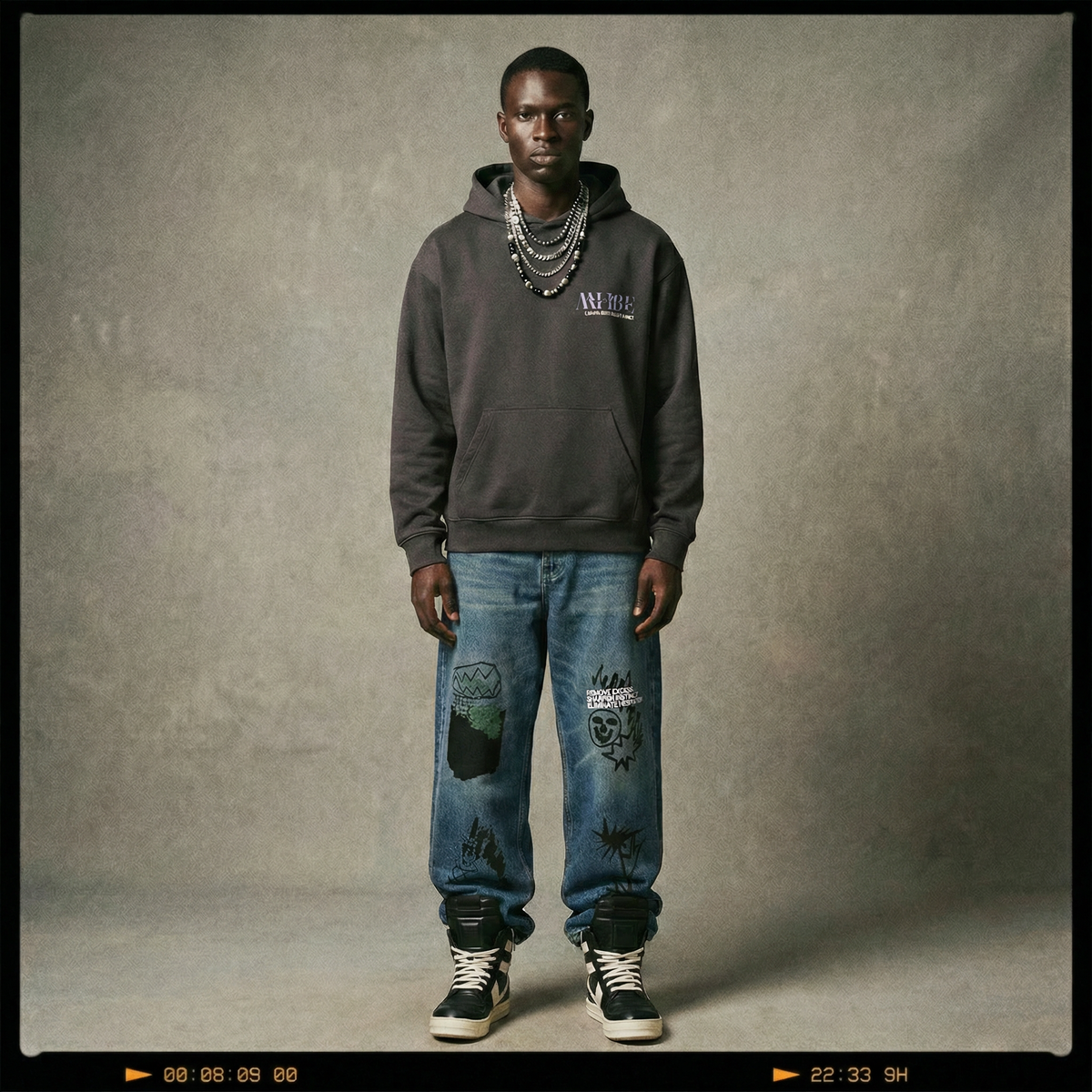
Pair them with a faded tee. Add a clean overshirt. Keep the shoes practical. Let the proportions do the talking.
No over-styling.
No costume drama.
Just enough friction to make the uniform yours.
The future belongs to brands with a world
A24’s influence on fashion is not only visual. It is structural.
The studio proves that a brand can build desire by creating a coherent world rather than chasing every trend. Its films, objects, collaborations, and campaigns feel like separate chapters in the same ongoing mythology.
Independent fashion is moving in the same direction.
The strongest brands do not only sell garments. They create a place for people to recognize themselves.
MERLE exists in that space.
Between documentation and design.
Between discipline and ease.
Between signal and silence.
Our latest collection carries that philosophy through washed graphics, relaxed forms, statement pieces, and clothing designed to move through real scenes.
Not loud.
Not invisible.
Quietly built for impact.
The A24 effect lasts because it understands something fashion keeps forgetting: people do not only want to buy an object.
They want to enter a story.
And the story does not need to shout.
It only needs to leave a mark.