

A stain lands fast, and the mind usually moves even faster. Coffee hits the sleeve, oil finds the pocket, red sauce drops onto a white tee five minutes before you leave, and suddenly the instinct is force instead of thought. Most people reach for hot water, hard scrubbing, too much detergent, and a rushed machine cycle because panic likes action, even when action makes the damage worse. The mark itself is rarely the full problem at first. The real problem is the frantic response that spreads the mess, weakens the fibers, fades the color, roughs up the finish, cracks the print, and sometimes seals the evidence into the fabric for good.
That is why clothing preservation begins with restraint instead of aggression. It is not about keeping every piece untouched or pretending a garment should float above real life. It is about knowing when to move and when to leave the fabric alone long enough to make the right move next. Blot. Treat. Wait. That is still the philosophy, but it works because each step slows you down and keeps the garment in one piece. A stain is only a mark until panic turns it into damage.
First: Don’t Make the Stain Bigger
The first rule is simple : do not help the stain travel. The second it happens, pause for a breath and stop turning one small problem into a larger one. Do not rub the area with your sleeve, do not drag a napkin across the surface like you are trying to erase it, and do not throw the garment straight into a hot wash hoping the machine will solve what carelessness just created. The first move is always to remove whatever is still sitting on the fabric before you start forcing it deeper into the weave.
If the stain is liquid, use a clean cloth, paper towel, or napkin and press down gently, lifting and repeating instead of grinding the spill outward. Work from the outside edge toward the center so the mark stays contained instead of blooming across the garment. If the stain is solid, use the edge of a spoon or a dull knife to lift away what is resting on top with just enough pressure to clear the surface. No harsh scraping. No sanding the cotton like concrete. The point is not to win in one dramatic move. The point is to keep the damage local, controlled, and recoverable.
> A stain becomes a disaster when panic gives it room to travel.

Cold Water First. Especially With Protein.
For most fresh stains, cold or cool water is the safest first move, especially when you are dealing with protein-based marks like blood, dairy, egg, or sweat. Heat feels decisive, but it often works against you by causing those substances to bind more tightly to the fibers, which means the stain stops being temporary and starts becoming part of the garment. That is why the loudest solution is often the worst one. Laundry has its own physics, and fabric remembers bad decisions.
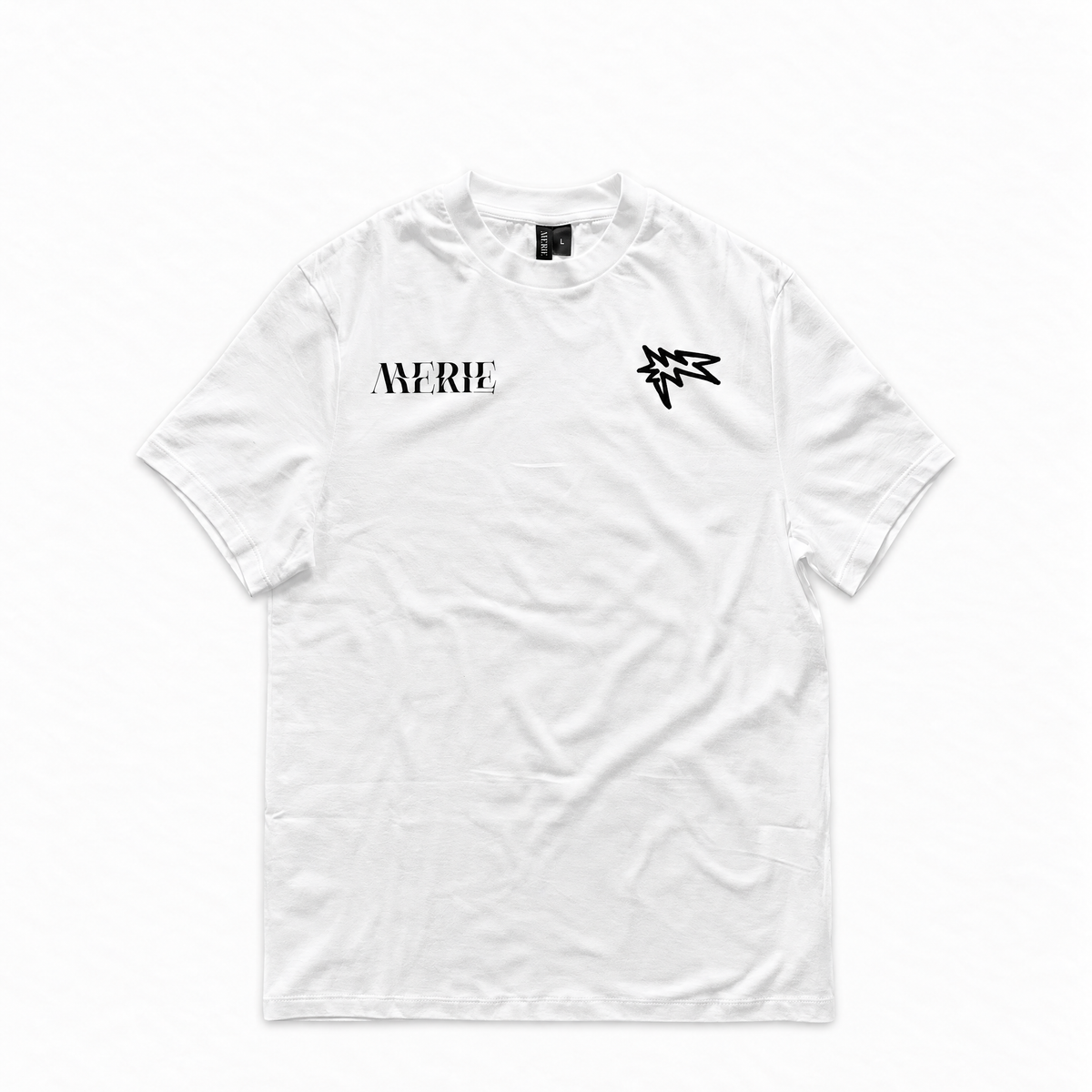
If the garment construction and care label allow it, turn the piece inside out and run cool water through the back of the stained area so the flow pushes the mark out rather than forcing it deeper into the cloth. Keep the treatment focused on the affected section instead of soaking the entire garment when only one spot needs attention. For a piece like THE GETAWAY T-SHIRT, that kind of precision matters. It is made from 100% combed cotton with a washed, distressed finish that is meant to evolve over time, and the care instructions are clear about washing on the reverse side with neutral detergent, avoiding bleach and soaking, and keeping drying temperatures low. The shirt already arrives with its own attitude and texture built in. There is no reason to erase that character with one rushed laundry decision.
Treat the Mark. Don’t Attack the Garment.
Once the excess is gone and the area is damp, apply a small amount of mild liquid detergent directly to the stain and let the product do what it is built to do. Small amount means small amount. You do not need to bury the garment in soap or create a chemical scene under the sink just to feel productive. More detergent does not automatically mean a better result. Usually it means residue, extra rinsing, and more handling than the fabric ever needed in the first place.
Work the detergent into the mark with your fingers, or use a soft-bristled toothbrush if the cotton is durable enough for it, but keep the pressure light and controlled. Furious scrubbing does not prove commitment. It pushes the stain deeper, spreads it outward, and roughs up the fabric surface while you are still pretending you are helping. On printed garments, that same friction can wear down the graphic before the stain has even left, which is a brutal trade. Let the detergent sit for 10 to 15 minutes, and if the mark is stubborn, give it more time while keeping the fabric damp and staying within the garment’s care instructions. Patience is not passive in this process. Patience is the method. It is the difference between preserving a piece and punishing it.
> The fabric does not need your strength. It needs your attention.
Know What You’re Treating
Not every stain answers to the same treatment, and one of the easiest ways to ruin a garment is to act like all marks are interchangeable. Oil and grease need to be blotted first, then treated with a small amount of liquid detergent and left to sit before washing. Flooding them immediately with hot water can make removal harder, especially when heat gets mixed with pressure and agitation. Coffee, tea, and juice should be blotted quickly, flushed with cool water from the back of the fabric, and pretreated before washing, because sugar-based stains have a way of disappearing temporarily and then returning later as a dull shadow under better light. Blood should always start with cold water, followed by blotting, a rinse from the back, and gentle detergent treatment, repeated if necessary. Hot water is the wrong introduction every time.
Ink needs even more control. The move is to contain it, not spread it. Place a clean cloth behind the stain so it does not transfer to the other side of the garment, avoid rubbing it across the fabric, and check a stain-specific guide or a professional cleaner before reaching for solvents that can do more damage than the mark itself. Paint, bleach, and unknown chemicals belong in a different category altogether because some of these are not really stains in the normal sense. They are chemical changes to the fabric, and no amount of frantic washing is going to reverse a reaction that has already happened. When the substance is unknown, identify it before choosing a treatment. The quiet move is often the smartest one because fabric usually rewards precision and exposes guesswork.
Wash According to the Label
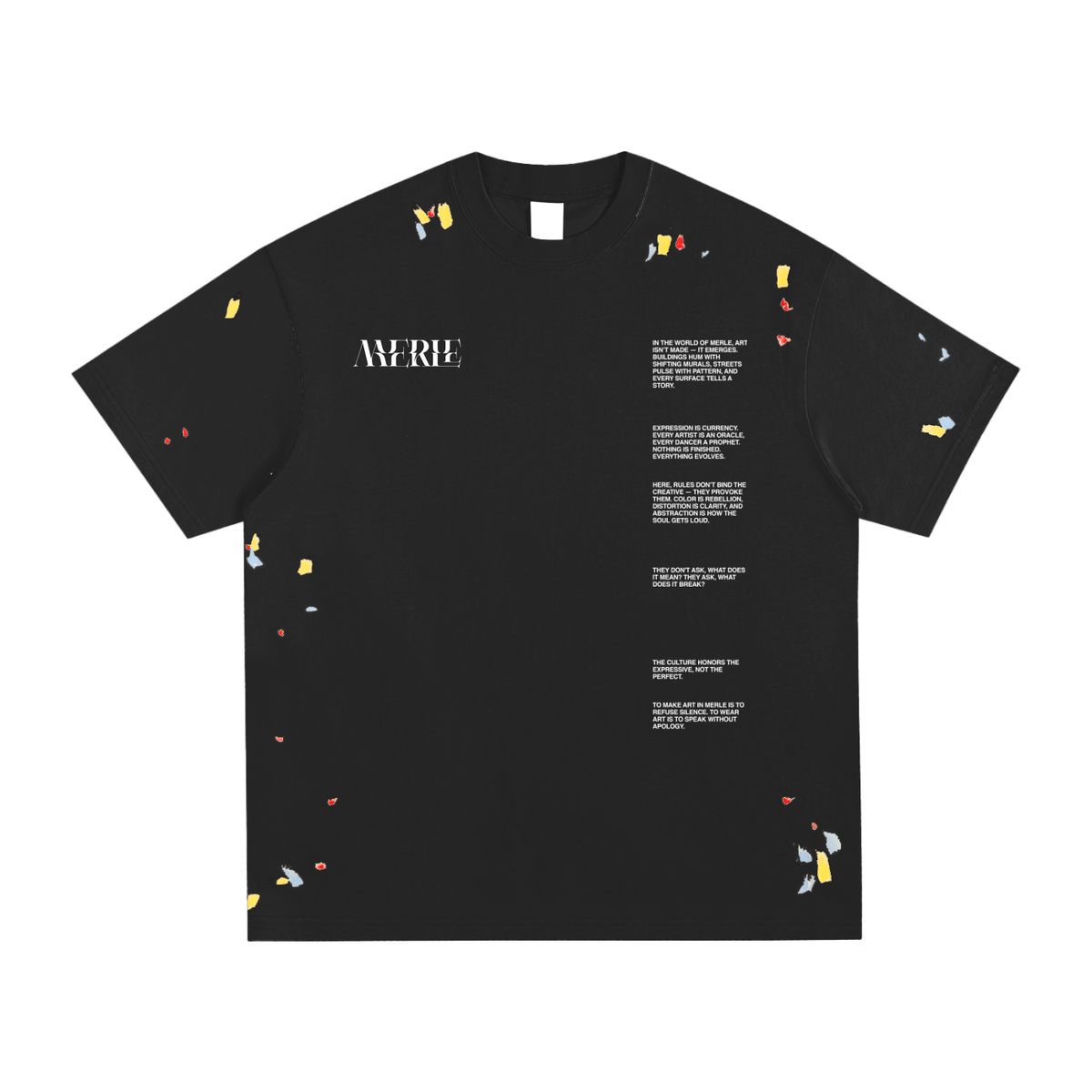
After pretreating, wash the garment according to its care label, not according to the panic still echoing in your head. Temperature matters, cycle speed matters, detergent matters, and the fabric itself always matters. A garment tells you how it wants to survive if you are disciplined enough to read the instructions instead of improvising. MERLE’s LOGO PAINT SPLATTER TEE, for example, is made from 100% cotton and carries a handcrafted splatter pattern, which is exactly why its care guidance specifies a gentle 30°C machine wash, no bleach, low tumble drying, and low-temperature ironing away from the print. That label is not decorative filler. It is operational information.
The same logic applies across the line. For printed pieces, turn the garment inside out before washing, keep it with similar colors, avoid bleach unless the label clearly allows it, and never iron directly over the graphic. The LOVE GROWS TEE uses 100% combed ringspun cotton with a soft hand-feel, a boxy silhouette, and reinforced double-needle construction, which gives it real structure, but even well-built cotton has limits when heat, abrasion, and careless treatment enter the room. Quality gives a piece a better starting point. Care decides how long that quality stays visible.
Never Dry a Stain You Haven’t Checked
This is where people usually undo their own progress. They wash the garment, notice the stain looks lighter, and send it straight into the dryer before actually confirming the mark is gone. Then the heat arrives and turns a fixable problem into a stubborn one. Heat can set many stains and make them far more difficult to remove, which is why the inspection has to happen before drying, while the fabric is still wet. Use natural light or a bright room, look at the area from different angles, and make sure the improvement is real instead of assumed.
If the mark is still there, treat it again and hold the dryer back. A second gentle round is usually better than one aggressive intervention because this is exactly where the panic wash loses its argument. Panic wants speed. Preservation wants control. For MERLE pieces with printed or distressed details, air-drying is often the calmer move anyway. If the care instructions permit tumble drying, keep the temperature low and avoid unnecessary heat. The Getaway T-Shirt’s care guidance specifically limits tumble drying to low temperature, no more than 30°C or 90°F. Low heat keeps the drama down and gives the garment a better chance to keep its shape, print, and finish intact.
The Five-Minute Stain Protocol
Save this somewhere because when the moment comes, you do not need a miracle. You need a sequence. Stop first and either remove the garment or isolate the stained area so the problem stays contained. Lift away solids with a dull edge instead of grinding them deeper into the cloth. Blot with a clean cloth from the outside toward the center, then rinse with cool water from the back of the fabric. Apply a small amount of mild liquid detergent, let it work for 10 to 15 minutes, and then wash according to the garment’s care label. Before drying, check the area carefully, and if the mark is still there, repeat the treatment instead of escalating it. Dry gently with low heat or air-dry when appropriate.
That is the system. No boiling water. No abrasive scrubbing. No random chemical cocktail assembled from whatever happens to be under the sink. Just discipline, sequence, and enough patience to let the fabric recover without making the story worse.
A Mark Is Not a Moral Failure
Clothing is supposed to enter your life and come back carrying proof that it was there. It sits beside coffee cups in the studio, moves through trains and sidewalks, passes through venues, rehearsal rooms, kitchens, and long nights, catches rain, collects dust, and brushes against concrete on the way to somewhere worth remembering. A garment that actually lives with you may show evidence of that movement, and that does not mean it has failed. It means it has been used the way real clothing is meant to be used.
The goal is not sterile perfection. The goal is to preserve the shape, color, texture, and meaning of the piece for as long as possible without stripping away the life inside it. MERLE is built around clothing as documentation : fragments of environment, sound, motion, and emotion made wearable. That means care is not about freezing a garment in time so it never changes. It is about keeping it in motion without letting carelessness destroy what made it matter in the first place. Treat the stain with discipline, let the garment age with intention, and learn the difference between patina and damage. The stain is not the enemy. The panic wash is.
> Care is quiet rebellion against the disposable wardrobe.
For more about the ideas behind the clothing, visit MERLE’s story and mission. For specific washing instructions, always check the care information on the individual MERLE product page before treating a difficult mark.